Friday, February 19, 2010

Advice to Rational Philosophers (who may happen to be Theologians)

The Journal of the Society of Christian Philosophers is _Faith and Philosophy_, on whose web site appears an article by Alvin Plantinga, "Advice to Christian Philosophers".

The gentleman's article is flawed. Because of circumstances, his article becomes the jumping-off point for my own advice. Dr. Plantinga writes:

Many Christian philosophers appear to think of themselves qua philosophers as engaged with the atheist and agnostic philosopher in a common search for the correct philosophical position vis a vis the question whether there is such a person as God. Of course the Christian philosopher will have his own private conviction on the point; he will believe, of course, that indeed there is such a person as God. But he will think, or be inclined to think, or half inclined to think that as a philosopher he has no right to this position unless he is able to show that it follows from, or is probable, or justified with respect to premises accepted by all parties to the discussion-theist, agnostic and atheist alike. Furthermore, he will be half inclined to think he has no right, as a philosopher, to positions that presuppose the existence of God, if he can't show that belief to be justified in this way. What I want to urge is that the Christian philosophical community ought not think of itself as engaged in this common effort to determine the probability or philosophical plausibility of belief in God. The Christian philosopher quite properly starts from the existence of God, and presupposes it in philosophical work, whether or not he can show it to be probable or plausible with respect to premises accepted by all philosophers, or most philosophers at the great contemporary centers of philosophy.
So in terms of modern philosophy -- with our modern understanding of epistemology -- the gentleman thinks it "quite proper" to putting the cart before the horse. His paper, in my view, should be titled "Advice to Christian Theologists" -- because his advice, thus outlined, does no scientific good for philosophy in general -- Christian or otherwise.

Now, I happen to hold the position that there are very good reasons to believe in a God -- reasons which, alas, would never be admitted as "scientific" by modern epistemological standards. If I'm reading Dr. Plantinga right -- and please, correct me if I'm wrong -- it would seem that the gentleman is advising against any philosophical discourse about the possible existence of God for his audience, whom he calls "Christian Philosophers".

I think we human beings would benefit from much more rigor in this discussion: by my lights, too much of it has been weasel-worded into unproductive semantics that do more to hide one's own motivations that honestly express ideas. To me, a "philosopher" who argues her points with the a-priori position that God exists, is better termed a "theologian".

Because otherwise: If one were to rise in support of the philosophies attributed to Jesus Christ, without discussing the _theology_ of Jesus, then how would we term such a person? Can we agree that such people could be called "Christian philosophers", even if mainstream Christianity doesn't consider them "Christian" by their standards?

If you accept my definitions of "philosopher" -- "Christian" or otherwise -- as well as "theologian", then I daresay we've managed to find the title of a most interesting paper, which one might call: "A Philosopher's Defense of Theism." Because it seems to me that that is as close as one can get to theology in philosophy...by today's English usage and epistemology.

But if a Christian philosopher decided to defend her philosophy with rational existentialism? Those ideas would be beneficial to all philosophers, regardless about what the believe about the theology of Jesus.

My next article will be "An Existential Defense of the Golden Rule".

The Prisoner's Dilemma problem in Game Theory is discussed in terms of the very fabric of the Universe: the strategy for maximum benefit in multiple iterations of Prisoner's Dilemma's is -- counterintuitively -- cooperation. This ontology is explored in terms of the Golden Rule.

Scott Doty

Santa Rosa, California

2009-12-29


Sunday, January 31, 2010

Regarding the "Golden Rule Ontology"

I had been making two assumptions when developing the idea of an ethics based on the apparent existential ontology of the "Golden Rule" being part of our universe. Underlying my previous discussions were three ideas:

The first is a reason to have a system of ethics in the first place; the second is -- having decided that a system of ethics is a good thing to have -- why that would be done within a scientific framework; and then finally deciding on that, how exactly it would be done.

(And as you can see above, underpinning my reasoning for having ethics is the definition of "good"...)

A discussion on the Facebook group "Faith Interface" with a Mr. Peter Grice brought this to light, and resulted in his disucssion of how we justify ethics (and/or morals). He posits a "presumption of [objective] morality" when talking about naturalism -- a thorny problem in naturalist philosophies. I myself subscribe to a theistic source of conscience (as seen in previous blog posts), BUT...

I wonder if we do better with a more complicated theistic justification, when a simpler one might do: sort of an Occam's Razor of supernatural presumption, when attempting to find the basis for our innate sense of right and wrong.

It's tough to examine our own conscience, our "moral compass", since it would seem to be part of our consciousness. And the source of _that_ remains very elusive.

I forget where I first read some cosmologist's idea that consciousness would be found to be more fundamental to the universe than we currently regard it. At a most basic level, we regard the universe as "I" and "everything else". So to consider ourselves as part of that "everything else" would be to rebel against the very situation we ordinarily perceive -- even though that "everything else" includes other people with other minds, that (we assume through shared experience) regard the universe in the same way we do.

Indeed, some naturalists seem almost embarrassed that self-awareness should exist at all, much less arising from some of the fine structure of the universe. So when Clayton talks about the non-determinism in QM, he's talking about effects -- such as wave function collapse -- that would seem to be affected by an observer. But if the observer's consciousness is somehow part of of the experiment, that leaves us with another kind of "non-determinism": the observer's own mind.

So my first point is this: We aren't talking about an either/or, but a gray scale of naturalism vs. supernaturalism. So the preposition of "least supernaturalism" -- that things tend to happen by natural processes: given two explanations for a phenomenon, the one with the least amount of supernatural influence is more likely to be the correct explanation.

Meanwhile, the lessons of AI research -- as well as all cognitive sci. -- is that our minds are very enigmatic things. If people take the time to consider their own consciousness, we can't help but intuit our own minds as "supernatural". Some Cog. scientists think our minds are simply the emergent properties of our brains -- but that doesn't explain where the "I" that we all have comes from.

So, I propose that the ultimate least amount of supernaturalism we must necessarily regard in our universe is determining the source of the "'I' mystery". So if we can incorporate that _source_ into justification for having a system of ethics, it should (if I'm right) follow the principle of "least supernaturalism".

Thursday, January 28, 2010

Scott Doty's Religious Autobiography

The following is a kind of "religious autobiography", for those wondering where I'm coming from. Sent to Americans United for the Separation of Church and State Associate Director for Religious Outreach.

My Religious Autobiography

My mother is a very devout Roman Catholic, and I was baptised and raised within that religion. This included being an altar boy, attending summer camp, and other activities sponsored by the Santa Rosa diocese.

I did attend public school, however, and in 1983-85 attended a high school that offered access to their new computer lab for interested students. I attribute a great deal of my critical thinking skills to the learning of software logic, as well as exploring and creating new software systems. This included my Advanced Placement courses in Computer Science and Mathematics in my senior year.

Meanwhile, during this late adolescence, I was attending a course intended to prepare us church youth for the RC Sacrament of Confirmation. It was here that I applied my critical thinking skills to ask some skeptical questions of the Church -- questions that neither the (lay) program leaders nor their religious advisor (a priest) could adequately answer. The result: the priest recommended that I drop out of the Confirmation program, and this was conveyed to me through the lay program leaders. (I never did meet with the priest.)

Over the years leading up to this, my mother had been more and more religiously minded, which (due to its affect on our family) I consider having become obsessive, even morbid. So at the age of 17, when my parents separated, my mother was afflicted with psychosis, exacerbated by her religious fears. The result: days later, she had a paranoid psychotic episode, for which I was finally able to get her to an acute psych ward for treatment. As sheltered as my upbringing was, the decision to take her to the hospital was difficult, requiring a kind of adult thinking that hadn't been any part of my life before. I was very happy when my father finally arrived at the hospital, who was very supportive in allaying my doubts and fears about my decision-making.

(Sidenote: My mother, thanks to ongoing treatment, has conquered the symptoms of her diagnosis of schizophrenia -- she is a wonderful person: loving, balanced, and tolerant of her adult children's life choices. I love her dearly.)

Fast forward to 1986: After a semester at Santa Rosa Junior College, I moved to live with my father and his family in San Franscisco, attending a semester at the city community college. After that, I enlisted in the United State Coast Guard, serving 4 years and three months active duty. My rating is now known as "Telecommunications Specialist" -- but at the time, it was called "Radioman". And in 1991, I was released from active duty as a Petty Officer, Second Class. Throughout all this, I was in a state of religious apostacy, though I held to my religious upbringing.

My stint in the USCG left me with a strong desire to help others, but also ignited a fierce passion for learning. Returning to SRJC in 1991, I attended courses in the sciences, including Astronomy and Archaeology -- even a course in Old Testament scholarship. But my strongest passion was for systems and network engineering, as I worked at SRJC's Computing Services to network the campus. 1991 was also the year that SRJC got their first Internet connection -- an event that, for me, was absolutely breathtaking when I realized what we had.

And so, Internet access expanded my learning capabilities so much, that I embarked -- without realizing it -- on a long journey of non-traditional education covering Astronomy, Philosophy, Physics, Theology, and Information Theory: including Queue Theory and Game Theory. The focus for all this learning was both the systems and networking careers that I continued...but also, discussions on the Usenet, a world-wide discussion system that still exists today.

Survival in Usenet discussions includes a healthy knowledge of critical thinking, as well as polemics -- a fact of life that has carried over to many of today's online forum discussions. This is also where I develop (and discussed) my scientifically skeptical philosophy, including reading books recommended from various Usenet FAQ's and discussions.

This narrative has grown long, so I won't go into my involvement in a number of First Amendment issues that arose at SRJC during its telecommunications "growing pains". But I will mention that I left their employ in 1995: partially because of a First Amendment issue, but also due to our company -- Sonic.net -- having grown enough that my attentions were needed full-time. That workload grew in intensity until 1998, when I burned-out.

After a period of recovery, I then continued the same workload for another two years, at which time I again "burned-out" again in 2000. I say "burned-out" in scare-quotes, because the actual event that led to a re-evaluation of my life -- including my religious life -- was, in thought, an epiphany; and in physical effects, was a kind of seizure in which I did not lose consciousness. I don't think about it much anymore, but I continue to be baffled about what exactly happened that morning -- but the result was a period of spiritual renewal, within which I underwent many religious experiences that cemented my faith in God. This included my first confession, in over 10 years, with the only Fransciscan priest in the Santa Rosa diocese -- a selection I made after much wandering in local parks, "walking quietly in the woods", and marveling at God's Creation. I'd also attended mass at a local RC parish, which I must say was a much more loving environment than the cold, stark parish that I'd grown up in.

Today, I am semi-retired, and have spare time that I fill with political, religious, and technological discussions online. I am a person: a particular nexus, the confluence of all these experiences and ideas -- and subsequent discussions therefrom -- which forms a healthy life of continuing non-traditional education. And as an advocate for human rights, I consider the First Amendment one of the most important restrictions on human government that the world has ever known.

And though my "first passion" is open source software and systems, I discuss my religious ideas online, too. A lot.

I have discussions with atheists, usually from the standpoint that their disgust for religion is warranted, if they only consider the ugly and aggregious statements and actions of religious extremists.

I have discussions, too, with a certain set of Christian apologists: which lately has been more about ecumenism and tolerance for other religions.

I guess, in a way, I'm a kind of "Unitarian Universalist apologist", advocating something I call "Rational Theology".

But back to the First Amendment. It seems like an easy idea: we need to keep human government secular, because it is impossible to equally protect the religious rights of everybody, if any one religion is favored by government. It is also odious to a free people to tax them to fund activities to support a religion that they don't subscribe to. This is rational, and rational people find these to be good ideas.

But religious extremists aren't rational.

So I continue to support the good work you all do at au.org, and I'm proud to be a member. I've signed up for the monthly auto-donation program -- please let me know if there is anything else I can do to help.

Scott Doty

Santa Rosa, California, 2010-01-28


Sunday, January 17, 2010

Bob Coy's Errors Regarding "COEXIST"


So after a few posts on this blog -- including some posts to Twitter -- I connected with @TheActiveWord, from which come the prosthelytizing views of one Pastor Bob Coy.

It's been an interesting week or so, seeing the views being broadcast from the Twitter handle, mostly using YouTube as a video medium...but alas, the one time I addressed them with criticism, they failed to engage in the conversation.

Then I came across another of Rev. Coy's unconscionable vlog posts, for which any rational American Patriot would have some pointed questions.

Here is the video, regarding the popular "COEXIST" bumper sticker:


The most obvious error that Rev. Coy makes is regarding any scriptual text as the literal "word of God." This Biblical literalism we see here in our United States remains one of the most unAmerican and, indeed, poisonous viewpoints to our God-given religious rights, protected as they are in our secular democratic republic.

Specifically, Rev. Coy engages in the logical fallacy of "false choice": He claims that since only one of these scriptural texts he mentions "must be right", and that they would seem to be (he claims) mutually exclusive, that the whole "COEXIST" idea is without merit.

Of course, Rev. Coy is free to employ logical fallacies in his arguments -- he just shouldn't expect rational people to accept such arguments.

Because, in fact, the idea without merit in this discussion is Rev. Coy's idea that any scriptural text is the literal word of God. Such a view finds very little traction in academia or mainstream Christianity -- a fact that Rev. Coy will either ignore or deny vehemently, depending on how much he wants to appeal to his fellow extremists.

Meanwhile, American Patriots might want to compare and contrast Rev. Coy's views with the Human Rights protected by our U.S. Constitution:

Congress shall make no law respecting an establishment of religion, or prohibiting the free exercise thereof; or abridging the freedom of speech, or of the press; or the right of the people peaceably to assemble, and to petition the Government for a redress of grievances.


And thank God for the First Amendment: I personally believe that our God-given right to religious freedom cannot be protected adequately in any nation with a state religion. Toward this, I strongly support the Rev. Barry Lynn's organization, Americans United for the Separation of Church and State.

In conclusion: The "COEXIST" bumper sticker is a clever, American, and meritorious meme that deserves the widest dissemination in our Marketplace of Ideas -- whereas the Rev. Coy's criticisms thereof defy any sense of reason. My advice to the Rev. Bob Coy is to de-radicalize his thinking with more theological scholasticism.

(He can start by recognizing that the Torah is the Pentateuch, the first five books of the Christian Old Testament. Oops.)

That's my story, and I'm sticking with it.

Scott Doty
Santa Rosa, CA, 2010-01-17

Thursday, January 7, 2010

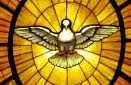
On the Nature of the Holy Spirit

I once had a discussion with a Franciscan priest who had been part of ecumenical activities of the RC church. In a nutshell: he had "co-prayed" with Buddhists.

At one point, I brought up my idea that the "Big Self" of Buddhism could be equated with the Holy Spirit. His eyes got very wide, then he changed the subject.

At the time, I had this idea of God being "a force"...not quite like "the Force" of the Star Wars Jedi, but "something out there".

But "force" is a part of the Universe -- the expenditure of energy (part of the Universe). And matter is part of the Universe, too, as well as space and time itself.

So we know what God isn't -- he is outside of His Creation, something that we can't even begin to fathom.

Meanwhile, some physicists think consciousness itself may be more fundamental to the Universe than we think.

And we have an idea in Eastern theology of "monism", vs. the (mostly) "dualism" of Western religions. Buddhism, for instance, is older that Christianity, and has this. Monism is the idea that all sentient beings are part of God.

The doctrine of an Eternal God the Creator also being part of some aspects of His Creation is a very appealing one, and I think Christianity neatly synthesized those monistic elements into a doctrine of "God-the-Father"+"God-the-Holy-Spirit" being God, period. The contemporary doctrine being dualism, I think this is as close to monism as they could get w/out being laughed out of the public square -- or worse.

(Remember, dear trinitarians: it wasn't until over 300 years after Jesus' birth that His divinity was canonized.)

So I refer to the Holy Spirit as "that Divine Spark in all of us" -- something fundamentally part of our consciousness, particularly our conscience. But that's just pretty language -- a "spark" is still more energy, and the Holy Spirit isn't energy, being part of God.

Instead, I see the Holy Spirit as being something very fundamental to the very fabric of the Universe, and that part of us that gives rise to free will with a guiding, God-given Conscience.

I think we can agree that the human part of Jesus was a man of great Conscience, filled with the Holy Spirit -- and he was crucified because of it.

Michael Servetus was also such a man of Conscience. He, too, was filled with the Holy Spirit -- and they burned him as a heretic.

Then there are the people in the world who do evil...even in God's name. They've lost touch with the Holy Spirit (or never listened to Him to begin with) leaving them utterly without moral compass.

And finally: some denominations depend on certain behaviors -- such as glossolalia -- as "proof" of being caught up with the Holy Spirit. Folks of this persuasion might be interested in the book "Battle for the Mind":

http://www.amazon.com/Battle-Mind-Physiology-Conversion-Brainwashing/dp/1883536065/

Scott Doty

2009-01-07

Wednesday, January 6, 2010

The Christian Way

The Christian Way

In my "Advice to Rational Philosophers (who may happen to be Theologians)", I said that my next article would be "an existential defensive of the Golden Rule."
But on further reflection, that may be jumping the gun. A "great need" has arisen for explaining to the more staunch "orthodox Christians" why the Golden Rule is so important, along with the First Commandment.
Why are the important? Because Jesus said that the Old Testament all hung on those two commandments.
Jesus also said this is what one needs for eternal life.
Just then a religion scholar stood up with a question to test Jesus. "Teacher, what do I need to do to get eternal life?" He answered, "What's written in God's Law? How do you interpret it?" He said, "That you love the Lord your God with all your passion and prayer and muscle and intelligence—and that you love your neighbor as well as you do yourself." "Good answer!" said Jesus. "Do it and you'll live."
(Luke 10:25-28 - MSG)
These synoptic verses embody, in very plain language, the essence of Christian Soteriology. Furthermore, Matthew adds the idea that "everything in God's Law and the Prophets hangs from" these commandments.
Jesus said, "'Love the Lord your God with all your passion and prayer and intelligence.' This is the most important, the first on any list. But there is a second to set alongside it: 'Love others as well as you love yourself.' These two commands are pegs; everything in God's Law and the Prophets hangs from them."
(Matthew 22:37-40 - MSG)
Even further: we have very good reason to believe that Jesus was being very precise with his language, since he was talking to a religious scholar -- that is, a "Sharia Lawyer" -- who was trying to trip him up. As an aside, we do know from history[1] that the Pharisees weren't necessarily the bad guys they seem in New Testament...but since they have come to be associated with the evils of a lawyer-esque approach to religion, I will refer to them as "New Testament Pharisees", or NTP's.
There are NTP's today, who profess to be "orthodox Christian" -- but do not live by the two commandments Jesus said were the necessities for eternal life. And ironically, there are people who profess other religions who do live by those two commandments -- and at the risk of offending them, I will say that they live a life sanctioned by the essence of Christian Soteriology as outlined above. I hereby say that they live "in a Christian Way".
Isn't that nice? Sir, it is pie...but if it were in the power of the NTP's of the world, they would burn me as a heretic.
Don't believe me? Let's discuss for a moment about what isn't a part of the Christian Way:
  • Baptism -- infant or otherwise
  • Tithing
  • Belonging to any religion in particular, Christian or otherwise
  • Attending church every Sunday, or on "holy days of obligation", or what-have-you
  • Diet
  • Circumcision
  • "Receiving Holy Communion" or "Taking Offering", or whatever
  • Believing in miracles one cannot see, such as those of Transubstantiation, or Consubstantiation, or other human doctrines
  • Believing in (yet another) physical Resurrection and Assumption into Heaven
  • Believing in (yet another) Virgin birth
  • Believing in any particular (or even "mysterious") aspects of God, including trinitarianism.
  • Murdering so-called "heretics"
Many of these practices don't conflict with the Christian Way -- but they are human inventions that confound the very essence of Christian Soteriology. Further: to put it nicely, it does a disservice to Jesus' message -- the Gospel, the Good News -- to claim that any of these listed items are necessary for Christian Salvation.

Final discussion

I linked above to the Wikipedia article on Michael Servetus, whose entry I came across while reading about Unitarian Universalism (UU). It would be interesting to compare & contrast Calvin's attack, and subsequent conspiracy to murder Servetus: with the kind of outrageous, hateful, and erroneous actions undertaken by the modern "religious right" here in our United States.
And that "religious right" -- these New Testament Pharisees -- will no-doubt question what Jesus meant by "God", "Love", and "Neighbor" in the verses I've quoted...and in doing so, they will be tearing apart the very Good News, the Christian Way, that Jesus spoke -- and which they largely ignore.
Scott Doty
Santa Rosa, California
2010-01-06 - Feast of the Epiphany for some.

[1] Citation from "Isaac Asimov's Guide to the Bible, Vol. 2 needed

Thursday, September 24, 2009

On Confronting Sentience

The very nature of language makes discussion of consciousness difficult.

For instance, consider the question, "Are you conscious?"

Break it down: "Are" - form of verb "to be", or the state of existence.

"You" -- the "second person" pronoun that describes your own "I".

"Conscious" -- having this consciousness, this sentience, this
self-awareness that "I" know that I have & experience -- and that, through
this shared experience, I assume you have, too.

Hopefully you can get the gist of the sentence, because its very structure
is an exposition of the nature of our perceptions: that there is me -- "I"
-- here, and everything else is "out there".

The zen philosopher Alan Watts was a man before his time, and we would do
well to consider his discussions of consciousness. He considered this
duality of "I" v. "everything else" an illusion of our senses, and that we
are all the same (Buddhist-esque concept of) "Big Self", only separated by
various eddies of decreasing entropy, of which "everyone" includes "their"
"own" perceptions.

To paraphrase Watts: an apple tree "apples". And so too, the Universe
"peoples". In his model, we "people" have in us aspects of the Universe, in
the same way an apple has the seeds to make other apple trees. Further,
there are "principles" of the apple tree, from which these "apples" grow.

Again, we are stretching the limits of language when discussing these
matters. An apple, until it falls, is part of an apple tree...but clearly it is not
the apple tree.

In the same way, our Universe is awash with grandiose forces that almost
defy human comprehension -- yet we live in a miniscule eddy of these
swirling forces, which is calm enough for an emergent principle of the
Universe to have emerged: Human beings, our little sub-eddies and pockets of
"self" that peer out at the Universe, perceiving in "own" particular ways.
We are sensor-pods and brains, connected to the Universe in ways that allow
us to _experience_ the Universe, as well as remember these experiences, and
contemplate them.

Now, Alan Watts may have gone out on a limb when he postulated that even the
very rocks of our world are conscious, but "just at a lower level"
(paraphrased) -- I'm a bit too sentience-chauvinistic to consider rocks
"conscious", even a little bit. Maybe this is a limitation of my own
perceptions, which (say) if regarding rocks at the proper time scale, would
observe this elusive emergent property of parts of the Universe --
consciousness -- from even the very rocks themselves.

But Watts, in his genius, did give us one of many neat turns of phrase in
these speculations: "...but Watch Out! The rocks will come alive!"

And you know, he's right. We know for a fact that evolution happens, and it
starts with "rocks" of various sorts being formed in stars, from which
eventually we have -- at least here on Earth -- ended up with organic
compounds, for which all scientific evidence indicates has produced human
beings.

BUT, the face that us human beings are "I's" -- conscious individuals --
continues to perplex science. I submit that those who have said that
consciousness is deeply intertwined with, and an integral part of, our
Universe, are indeed on the right track. Further, if we admit to ourselves
that the only way we "know" our neighbor is "conscious" is through our
shared experience of this noumenon, then we would do well to consider
other "shared experiences" that seem to be part of our Human Condition.

This is all lead-up to my speculation: "Consciousness" -- that is,
"Sentience" -- is only known to us through perceptions of the behaviors of
us packages of brains and sensory equipment that we call "sentient beings".

But it is clear that consciousness is also, at the very least, an emergent
property of our Universe. I wonder if it doesn't make sense to decouple
this "counsciousness" from our organic packages, instead regarding it as
part of the Universe itself, from which we gain the illusion of being
"individuals" through the nature of our own particular organic packages, our
"beings"?

_I_ certainly don't know how we would design an experiment to determine if
that is the case. But if we broaden our notions of science to include
"share experiences that are difficult to measure", we might have a start at
understanding from where this "consciousness" arises...and if any part of it
persists beyond the destruction of our own packages of organic matter.

Wishful thinking? Maybe. But definitely worth exploring, if only to push
the boundaries of a fundamental essences of our Human Condition: the
Science of Mind.

Thank you for reading.

-Scott
2009-09-24